Korean Bibimbap
Highlighted under: Inspired World Food Collection
Discover the vibrant and flavorful world of Korean Bibimbap, a delightful rice dish topped with an assortment of vegetables, meat, and a spicy sauce.
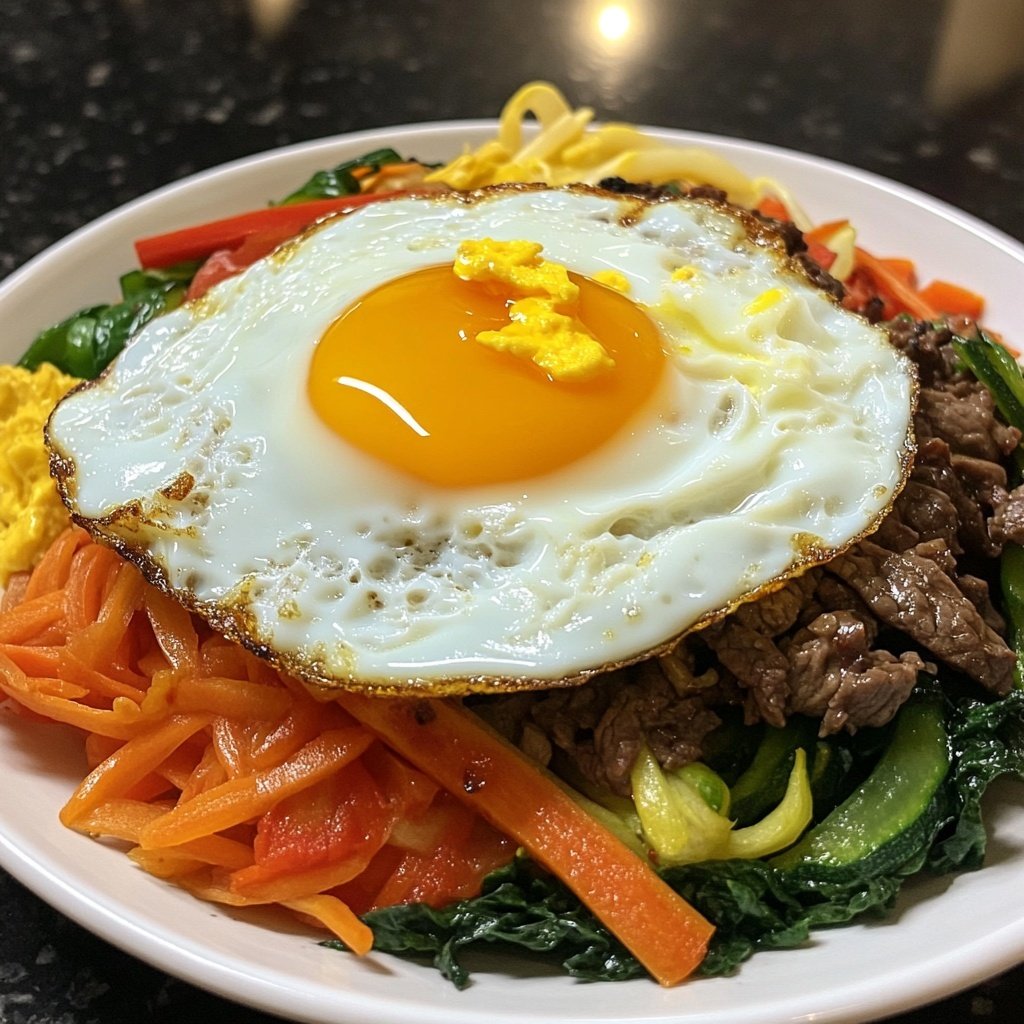
Bibimbap is a traditional Korean dish that translates to 'mixed rice'. It's a perfect meal that showcases the harmony of flavors and textures in Korean cuisine. This dish is not only visually appealing but also packed with nutrients.
Why You Will Love This Recipe
- Colorful presentation that excites the appetite
- Customizable to suit your taste preferences
- Healthy and balanced meal in one bowl
The History of Bibimbap
Bibimbap, which translates to 'mixed rice,' is a traditional Korean dish that has been enjoyed for centuries. Its origins can be traced back to the late 19th century, when it was served as a royal dish during the Joseon Dynasty. The dish was designed to combine various leftover ingredients, creating a harmonious blend of flavors and textures in a single bowl. Today, bibimbap is celebrated not only for its taste but also for its colorful presentation, making it a popular choice among locals and visitors alike.
The beauty of bibimbap lies in its versatility. Each region in Korea has its own variations, often influenced by local ingredients and culinary traditions. For instance, Jeonju bibimbap is famous for its use of high-quality ingredients, while Dolsot bibimbap is served in a hot stone pot, allowing the rice to develop a crispy crust. This adaptability has helped bibimbap become a beloved dish that transcends cultural boundaries, allowing people from all walks of life to enjoy its unique flavors.
Health Benefits of Bibimbap
Bibimbap is not only delicious but also a nutritious option for those seeking a balanced meal. Packed with a variety of vegetables, this dish provides essential vitamins and minerals that support overall health. Vegetables like spinach, zucchini, and carrots are high in fiber, aiding digestion and promoting a healthy gut. Furthermore, the inclusion of protein from beef or tofu makes it a satisfying meal that can keep you energized throughout the day.
Another health benefit is the use of sesame oil and gochujang, which are rich in antioxidants. Sesame oil is known for its heart-healthy properties, while gochujang adds a spicy kick that can boost metabolism. By choosing fresh, high-quality ingredients, you can create a bibimbap that not only tantalizes your taste buds but also supports your wellness goals, making it an excellent choice for any meal.
Customizing Your Bibimbap
One of the most exciting aspects of bibimbap is its customizability. You can easily tailor this dish to suit your taste preferences or dietary restrictions. If you're looking to make a vegetarian or vegan version, simply substitute the ground beef with tofu or tempeh and omit the eggs. You can also experiment with different vegetables such as bell peppers, sweet potatoes, or even kale, depending on what you have on hand.
For those who enjoy a bit more heat, consider adding extra gochujang or topping your bibimbap with sliced jalapeños or kimchi. Additionally, you can play around with different sauces, like adding a drizzle of sriracha or a sprinkle of lime juice for a zesty twist. The possibilities are endless, allowing you to create a unique bibimbap that reflects your personal taste and creativity.
Ingredients
Gather the following ingredients to prepare your delicious Korean Bibimbap:
Ingredients
- 2 cups cooked rice
- 1 cup sliced zucchini
- 1 cup shredded carrots
- 1 cup bean sprouts
- 1 cup spinach
- 1 cup sliced mushrooms
- 1/2 pound ground beef (or tofu for a vegetarian option)
- 2 eggs
- 2 tablespoons soy sauce
- 1 tablespoon sesame oil
- 1 tablespoon gochujang (Korean chili paste)
- 1 tablespoon vegetable oil
- Salt and pepper to taste
- Sesame seeds for garnish
Once you have all your ingredients ready, you can start cooking!
Instructions
Follow these steps to create your Korean Bibimbap:
Prepare the Vegetables
In a pan, heat vegetable oil over medium heat. Sauté zucchini, carrots, bean sprouts, and mushrooms separately until tender. Season with salt and pepper.
Cook the Beef
In the same pan, cook the ground beef until browned. Add soy sauce and sesame oil, mixing well. Remove from heat.
Fry the Eggs
In a separate pan, fry the eggs sunny-side up until the whites are set but the yolks are still runny.
Assemble the Bibimbap
In a bowl, place a serving of rice. Arrange the sautéed vegetables and beef on top. Add the fried egg and drizzle with gochujang. Garnish with sesame seeds.
Mix everything together before eating for the best flavor experience!
Pro Tips
- Feel free to swap the vegetables based on your preference or what's in season. Adding avocado can enhance the creaminess.
Serving Suggestions
Bibimbap is a versatile dish that can be served as a main course or as part of a larger spread. For a complete Korean meal, consider pairing it with side dishes like kimchi, pickled vegetables, or a refreshing cucumber salad. These accompaniments not only enhance the meal's flavor but also add variety to your dining experience.
If you're hosting a dinner party, bibimbap can be a fun, interactive dish. Set up a bibimbap bar where guests can customize their own bowls with their choice of vegetables, protein, and sauces. This creates an engaging atmosphere and ensures that everyone gets to enjoy a meal tailored to their preferences.
Storage and Reheating Tips
If you have leftovers, bibimbap can be stored in the refrigerator for up to three days. To keep the ingredients fresh, store the rice, vegetables, and protein in separate containers. When you're ready to enjoy your meal again, simply reheat the rice and vegetables in the microwave or on the stovetop. If you have a fried egg, it's best to cook a new one fresh for the best texture and flavor.
For those who prefer to meal prep, you can prepare the ingredients in advance and assemble the bibimbap as needed. This makes it an excellent option for busy weekdays, allowing you to enjoy a delicious and nutritious meal with minimal effort. Just remember to add the gochujang and sesame seeds just before serving for the best taste.
Questions About Recipes
→ Can I make Bibimbap vegetarian?
Yes, simply replace the beef with tofu or additional vegetables.
→ What can I use instead of gochujang?
You can use sriracha or any other chili paste, although the flavor will differ.
→ How can I store leftovers?
Store the components separately in airtight containers in the fridge for up to 3 days.
→ Is Bibimbap served hot or cold?
Bibimbap is traditionally served hot, but you can enjoy it at room temperature as well.
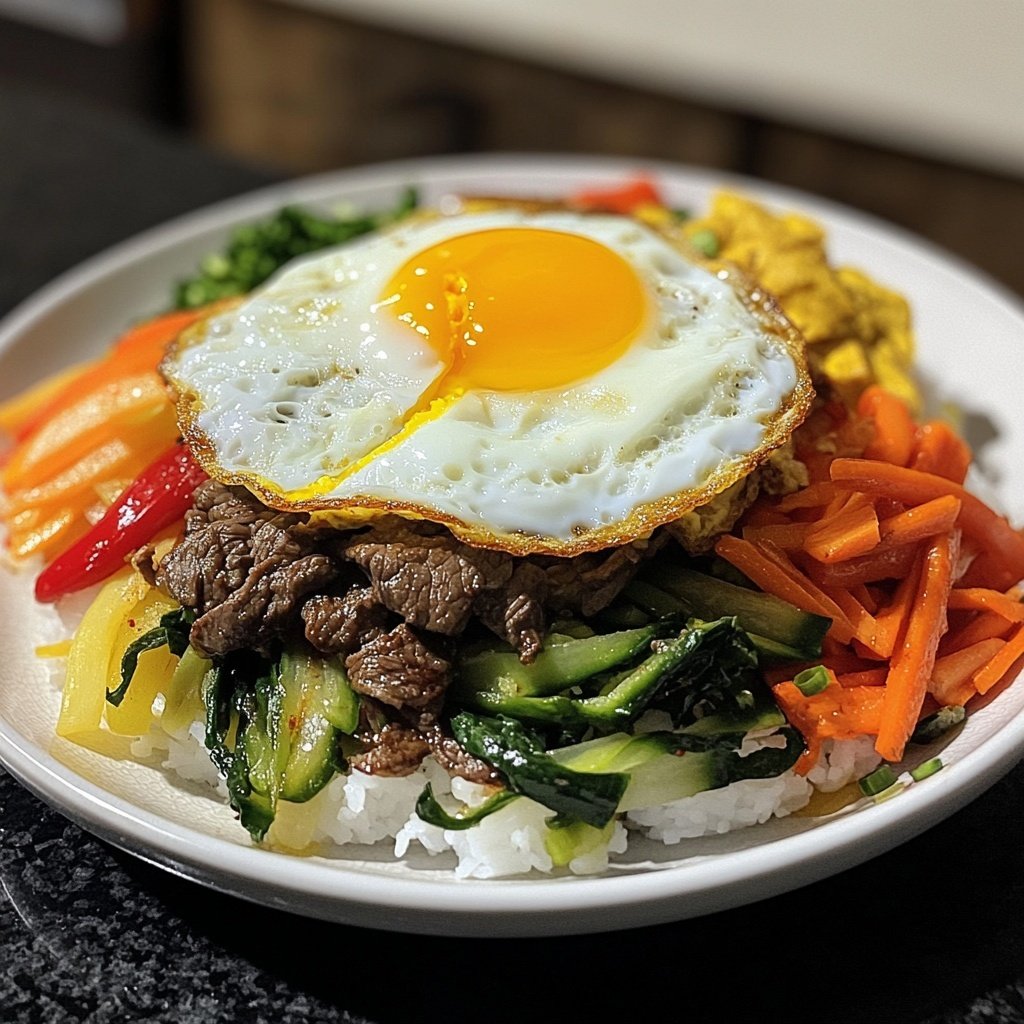
Korean Bibimbap
Created by: Juliet Ashford
Recipe Type: Inspired World Food Collection
Skill Level: Intermediate
Final Quantity: 2 servings
What You'll Need
Ingredients
- 2 cups cooked rice
- 1 cup sliced zucchini
- 1 cup shredded carrots
- 1 cup bean sprouts
- 1 cup spinach
- 1 cup sliced mushrooms
- 1/2 pound ground beef (or tofu for a vegetarian option)
- 2 eggs
- 2 tablespoons soy sauce
- 1 tablespoon sesame oil
- 1 tablespoon gochujang (Korean chili paste)
- 1 tablespoon vegetable oil
- Salt and pepper to taste
- Sesame seeds for garnish
How-To Steps
In a pan, heat vegetable oil over medium heat. Sauté zucchini, carrots, bean sprouts, and mushrooms separately until tender. Season with salt and pepper.
In the same pan, cook the ground beef until browned. Add soy sauce and sesame oil, mixing well. Remove from heat.
In a separate pan, fry the eggs sunny-side up until the whites are set but the yolks are still runny.
In a bowl, place a serving of rice. Arrange the sautéed vegetables and beef on top. Add the fried egg and drizzle with gochujang. Garnish with sesame seeds.
Extra Tips
- Feel free to swap the vegetables based on your preference or what's in season. Adding avocado can enhance the creaminess.
Nutritional Breakdown (Per Serving)
- Calories: 560 kcal
- Total Fat: 22g
- Saturated Fat: 6g
- Cholesterol: 200mg
- Sodium: 800mg
- Total Carbohydrates: 68g
- Dietary Fiber: 5g
- Sugars: 4g
- Protein: 22g